



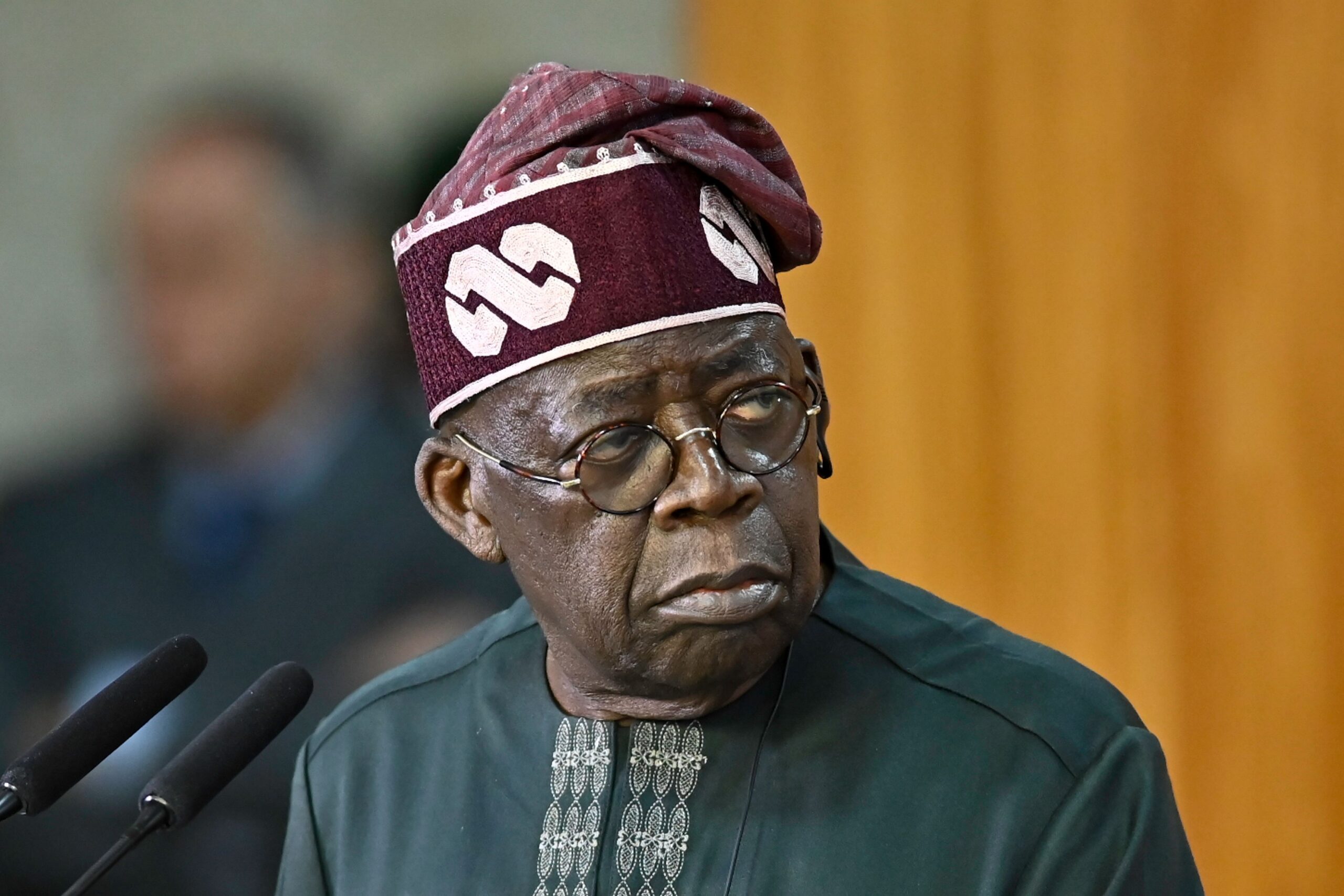
Former Osun State Governor, Prince Olagunsoye Oyinlola, has criticised President Bola Ahmed Tinubu’s intervention in the Economic and Financial Crimes Commission’s restriction of the state government’s accounts, describing the action as legally questionable.
Oyinlola spoke on Tuesday during an interview on Frontline, a current affairs programme on Eagle 102.5 FM, Ilese-Ijebu, where he weighed in on the controversy surrounding the EFCC’s “Post No Debit” directive on Osun government accounts and the subsequent presidential order for the restriction to be lifted.
According to the former governor, the EFCC was acting within the powers assigned to it by law when it imposed the restriction and should have been allowed to complete its investigation without presidential interference.
“Legally speaking, the EFCC was exercising its constitutional rights and duties. So, for the President to step in, it is illegal,” Oyinlola said.
He argued that presidential intervention would have been more appropriate after the conclusion of an investigation and any resulting judicial process.
“When it comes to the point where you exercise your prerogative or mercy, if they have been found guilty and sentenced, then you can exercise your right as the President,” he added.
Oyinlola, who governed Osun between 1999 and 2003, also rejected suggestions that the EFCC’s action was designed to disrupt the state’s ability to fund the forthcoming governorship election.
He maintained that government resources should not be deployed to finance electoral activities, questioning the argument that the account restriction was intended to prevent the state from accessing money for the election.
“The President doesn’t want the state to have access to funds to execute the election. I don’t think a state fund is meant to execute elections,” he said.
The former governor, however, noted that the EFCC’s mandate did not extend to stopping the payment of workers’ salaries.
“There is no institutional or constitutional power for EFCC to stop payment of salaries,” he stated.
Oyinlola further defended his position by stressing that presidential authority does not automatically render every action legally valid.
“I’m only speaking to you about what is legal. I got called to the Bar in 2012, and I think I know a bit of law too,” he said.
He also cited concerns raised by some Senior Advocates of Nigeria regarding the possible implications of presidential intervention for the independence of anti-graft institutions.
“There are some Senior Advocates that have taken on Mr President, that you are taking away the independence of that institution. Let them do their job,” Oyinlola added.
On the broader controversy surrounding the EFCC investigation, the former governor said the legality of the commission’s action should be determined by its statutory mandate and the rules guiding its operations rather than political considerations.
He said, “The EFCC thing is outside the purview of those who are not engaged in the operation of EFCC. For us to adjudge whether EFCC was right or wrong, we need to address the objective and the rules assigned by the Constitution to the operation of EFCC.”
Oyinlola also questioned why Osun State was subjected to the account restriction when, according to him, a similar situation was not evident in neighbouring Ekiti State.
“Talking about the EFCC unblocking the account, I think in Ekiti State, there is nothing of such. Why is this now in Osun State that the accounts of the state are being blocked?” he asked.
The former governor also addressed criticism surrounding the half-salary policy associated with previous administrations in Osun, acknowledging that governments could make mistakes but insisting that corrective measures should ultimately be taken in the interest of citizens.
“If we talk about HALFUSA or no HALFUSA, yes, administrations will make mistakes. And he has addressed it,” Oyinlola said.
He recalled that his administration took steps to address outstanding welfare issues after assuming office, including the re-engagement of workers who had been dismissed by a previous administration.
“He addressed the issue of non-payment of pensioners when I came in. Thousands of workers were sacked before I came in. I re-engaged all of them,” he said.
Oyinlola added that government decisions should ultimately be guided by the welfare of the people rather than political or personal considerations.
“So, whatever is going to be good for the people of the state, you do without applying any nepotism into your actions,” he said.