



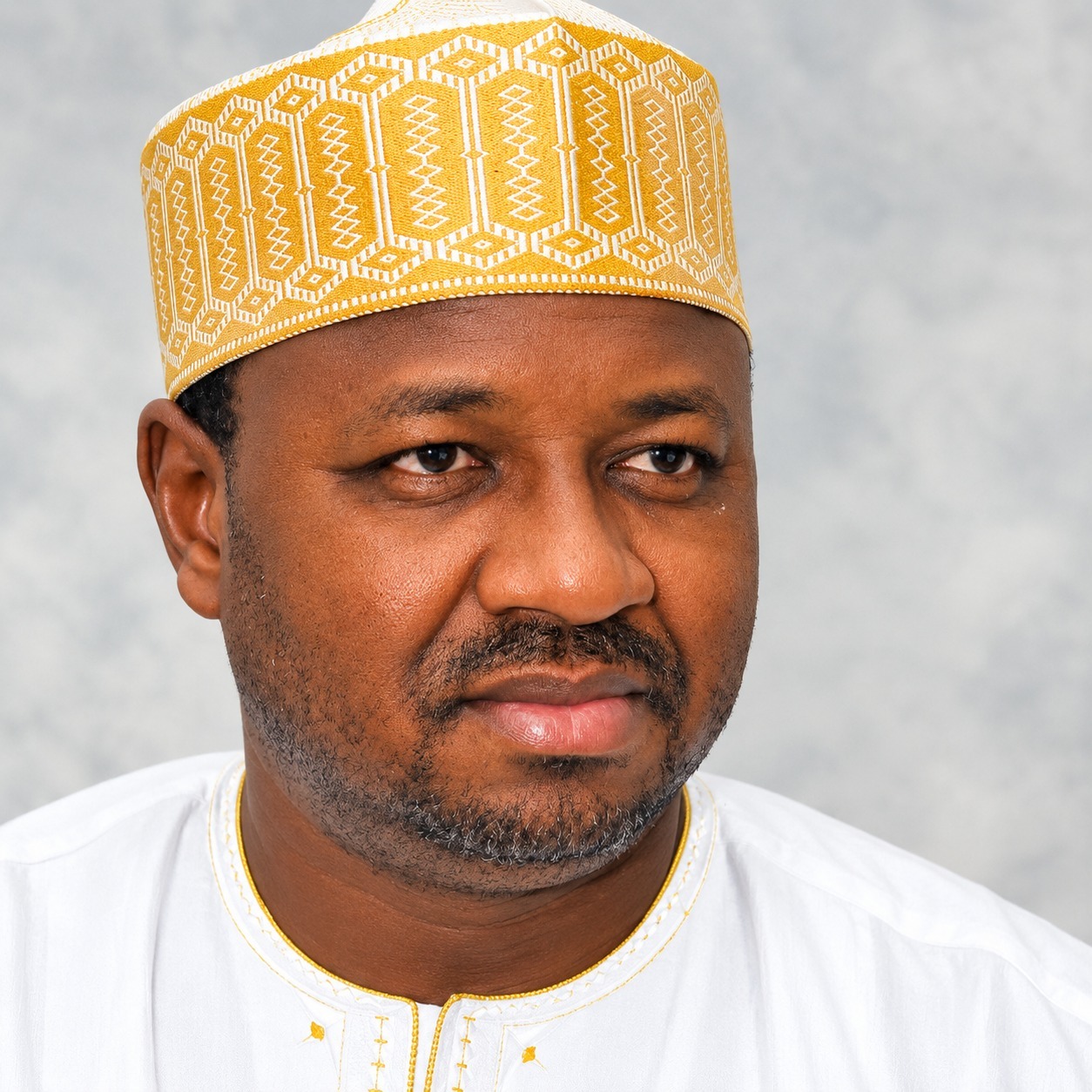
The Convener of the League of Northern Democrats and a leading promoter of the All-Democratic Alliance (ADA), Dr Umar Ardo, has accused President Bola Ahmed Tinubu’s administration of giving the South, particularly the South-West, a larger share of federal resources, appointments and government opportunities.
Ardo made the allegation on Monday while appearing on Frontline, a current affairs programme on Eagle 102.5 FM, Ilese-Ijebu, Ogun State.
During the interview, he assessed the Tinubu administration’s performance in Northern Nigeria and discussed what he described as the possible political consequences of the government’s policies ahead of the 2027 general elections.
According to him, the alleged imbalance is more evident in the actual disbursement of funds to ministries than in the budgetary allocations approved on paper.
Ardo claimed that federal ministries in the South had received substantially more funds than their counterparts in the North.
He said the disparity in actual releases was significant and alleged that ministries in the South had received roughly five times the amount released to Northern ministries.
The politician argued that government performance should not be measured solely by the number of appointments allocated to each region, but also by the distribution of financial resources, agencies and other opportunities.
He further alleged that many federal parastatals had been allocated to the South, contributing to what he described as a growing feeling of marginalisation among sections of the Northern population.
Appointments and Regional Representation
Ardo also criticised the distribution of major political appointments under the present administration, arguing that it had fuelled perceptions of regional exclusion in parts of Northern Nigeria.
He said Nigeria’s ethnic and geographical diversity makes appointments a particularly sensitive issue, especially when government positions are viewed through the prism of regional identity.
According to him, many Northerners believe the administration has been dominated by people from the President’s ethnic and regional background.
He argued that the perception had damaged the administration’s standing among some Northern communities.
Ardo, however, noted that the question of regional representation is complicated by the diverse identities of states and communities commonly grouped under Northern Nigeria.
He specifically referenced Kwara and Kogi, arguing that their historical, cultural and linguistic ties to the Yoruba-speaking region should be taken into consideration when analysing the distribution of appointments.
Kwara, Kogi and the Politics of Identity
The Northern political activist said the identities of Kwara and Kogi have historically generated debates about where the states should be politically and culturally classified.
He argued that appointments given to people from the two states could be perceived as Yoruba representation because of their cultural connections, even though both states are geographically located in Northern Nigeria.
Ardo maintained that Northern Nigeria is too diverse to be treated as a completely homogeneous political bloc.
He said the region comprises several ethnic and cultural groups, making a simple North-versus-South assessment of political representation difficult.
Economic Reforms: ‘North Has Not Benefited’
Ardo was also critical of the economic policies introduced by the Tinubu administration, including the removal of fuel subsidy and other reforms aimed at restructuring the economy.
He said he had not seen significant evidence that the reforms had improved the economic circumstances of ordinary Northerners.
According to him, the impact has been particularly severe in the North because the region has a large population of people living in poverty.
Ardo argued that rising inflation had reduced citizens’ purchasing power and deepened economic hardship.
He described the situation as a progression from poverty to what he termed widespread destitution, particularly among vulnerable communities.
He further claimed that the economic squeeze had severely weakened the middle class, while suggesting that those benefiting most from government opportunities were largely people within the political establishment.
Businesses Also Feeling the Pressure
The political activist said the effects of the economic reforms were not limited to low-income households, arguing that businesses across Northern Nigeria were also struggling.
He cited billionaire businessman Aliko Dangote as an example, saying the challenges surrounding Dangote’s business interests illustrated the difficulties confronting entrepreneurs under the current economic environment.
Ardo specifically referred to public debates surrounding the Dangote refinery, noting that Dangote had made several interventions concerning issues affecting the project.
According to him, the experience demonstrates the need for a more stable and predictable economic environment in which businesses can plan, invest and operate effectively.
He argued that if large businesses were struggling under the prevailing conditions, smaller enterprises and ordinary traders were likely facing even greater difficulties.
Insecurity Remains a Major Concern
Beyond economic challenges, Ardo identified insecurity as one of the most pressing problems confronting Northern Nigeria.
He criticised the Tinubu administration for what he described as inadequate progress in tackling insurgency and other security threats affecting communities across the region.
While acknowledging that Nigeria’s security challenges are complex and cannot be resolved overnight, he argued that the government should be able to develop more effective strategies to confront the problem.
Ardo maintained that insecurity has consequences beyond the loss of lives and property, as farmers, traders and other businesses are unable to operate normally when communities remain unsafe.
He said a lasting solution to insecurity would also help stimulate economic activity and improve livelihoods across the affected areas.
Nigeria Can Learn From Other Countries
Ardo said Nigeria should study how other countries successfully confronted prolonged insurgencies and apply relevant lessons to its own security challenges.
He disclosed that he had written a book examining how a three-decade insurgency in South America was brought under control within a year.
According to him, experiences from countries that have successfully dealt with insurgencies could offer useful lessons for Nigeria’s security policymakers.
Infrastructure Deficit
Ardo also raised concerns about infrastructure development in Northern Nigeria, particularly the condition of major roads.
He cited the Kaduna-Kano road as an example of infrastructure challenges that continue to affect transportation and economic activity in the region.
He argued that poor road networks increase travel time and transportation costs while making movement between communities more difficult.
He questioned whether the current administration had done enough to address some of the longstanding developmental problems inherited from previous governments.
2027: Ardo Predicts Major Political Shift
With the 2027 presidential election approaching, Ardo said the experiences of Northern voters under the Tinubu administration could significantly influence the outcome of the election.
He argued that the support President Tinubu received from Northern voters during the 2023 presidential election should not be regarded as a permanent political commitment.
According to him, voters will ultimately assess the administration based on issues affecting their daily lives, including insecurity, poverty, inflation, employment and the wider state of the economy.
Ardo consequently made a strong prediction about President Tinubu’s prospects in Northern Nigeria in 2027.
He said that if the election is conducted freely, fairly and credibly, Tinubu would struggle to secure significant support in the region, predicting that the President could receive less than 10 per cent of the Northern vote.
The prediction places Northern voters at the heart of the political contest ahead of the 2027 presidential election, given the region’s significant electoral weight.
Ardo’s comments come amid growing political realignments ahead of the next general election, with competing political interests increasingly seeking to consolidate support across Nigeria’s regions.