



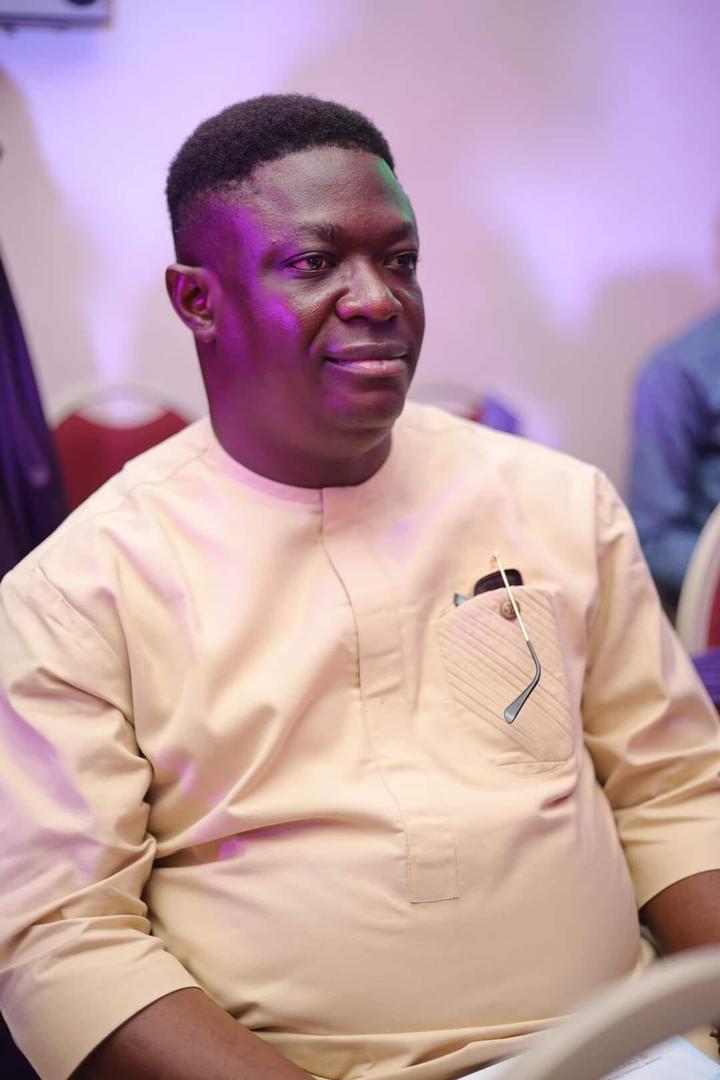
The Executive Director of the Centre for Responsive Governance, Comrade Ayodeji Ologun, has urged Nigerian women to become more assertive and actively pursue political power rather than expect leadership positions to be allocated to them on the basis of gender.
Ologun said women seeking greater representation in governance must be willing to compete, negotiate and demonstrate their competence, experience and political strength.
He made the remarks on Monday while speaking on Frontline, a current affairs programme on Eagle 102.5 FM, Ilese-Ijebu.
According to him, the large number of women involved in political campaigns and mobilisation does not necessarily translate into meaningful participation in decision-making and leadership.
“Power can’t be given to you based on gender. Power is to be fought for and negotiated, is to be grabbed,” Ologun said.
He maintained that women aspiring to political office should not depend on political structures to hand positions to them but must actively position themselves to compete and win.
Ologun cited the election of a woman as President of the Nigerian Bar Association as evidence that women can succeed in competitive contests when they present themselves as the preferred candidates.
“We have an NBA president who is a woman, do you know how many men she contested with?” he asked.
He noted that the female candidate emerged victorious because voters considered her the best person for the position, rather than because the office was reserved for a woman.
“But she won that election because the constituent in that election considered her as the best. Because she fought for it and she ran with it,” he said.
Ologun further questioned the argument that every leadership meeting or decision-making body must have a woman represented simply to achieve gender balance.
“I have always said it at board meeting when I have the opportunity to do that. Don’t come and tell me that the meeting is not balanced because we don’t have a woman,” he said.
He argued that competence and qualification should remain important considerations in determining who occupies leadership positions.
“Which law says that there must always be a woman representation in a meeting? Whoever deserves to be at the table, whether a man or a woman, will find their way to be there.”
The governance advocate also expressed concern over the limited number of women seeking the highest political offices in Nigeria.
He said the emergence of a few female presidential and vice-presidential candidates should not, on its own, be regarded as evidence of sufficient female participation in politics.
“For me, it is irrelevant that we have two females running for president, and four females running for vice president. It shows that women are not yet doing enough,” he said.
Ologun argued that more qualified women must come forward and take advantage of their numerical strength to influence the direction of political parties and the emergence of candidates.
“Women of quality are not yet coming out to participate in politics,” he said.
According to him, women constitute a significant proportion of the electorate and could potentially determine who secures political party tickets if they organise and vote strategically.
“But they have the largest number. Imagine that they want to use their strength to determine who carries the flag of the political party. You can be sure that if care is not taken, women will be the flag bearers of practically all the political parties,” he said.
Ologun, however, criticised the tendency to restrict women’s involvement in politics to campaign mobilisation, entertainment and rally activities.
He said women should reject being reduced to dancing, singing and other roles that do not give them meaningful influence over political decisions.
“What do they allow themselves to be used for? Ankara and dancing, to compose songs of abuse, singing and dancing it at political parties and be seen as objects or figures just to fill the room,” he said.
He urged women to move beyond such roles and demonstrate their capacity to make decisions, influence political processes and occupy leadership positions.
“Until women begin to assert their place in politics, begin to show their strengths and CVs,” Ologun said.
He stressed that educational qualifications alone would not guarantee political influence unless women translated their knowledge, experience and competence into active political participation.
Using the imagery of a candle, Ologun said women must make their abilities visible and take deliberate steps towards securing political power.
“You don’t light a candle and put it under a bushel. A candle is to light the room. Until women begin to show themselves forth as a candle to light up the room, nobody should come and tell us that something should be given to them by allocation.”
Ologun concluded that achieving greater female representation in Nigerian politics would require women to organise themselves, build political influence, negotiate strategically and contest for positions at all levels.
He maintained that women already possess the numerical strength and educational capacity to significantly influence the country’s political landscape, but must convert those advantages into organised political action.