



Nigeria’s headline inflation rate eased slightly to 15.91 per cent in June 2026, down from 15.93 per cent recorded in May, according to the latest Consumer Price Index (CPI) report released by the National Bureau of Statistics (NBS).
The marginal decline of 0.02 percentage points marks the first slowdown in headline inflation in three months, while also representing a significant drop from the 25.29 per cent recorded in June 2025.
According to the NBS, on a month-on-month basis, the headline inflation rate stood at 1.66 per cent in June, compared to 1.75 per cent in May, indicating that the pace of increase in the general price level slowed during the month.
“On a month-on-month basis, the headline inflation rate in June 2026 was 1.66%, which was 0.09% lower than the rate recorded in May 2026 (1.75%). This means that in June 2026, the rate of increase in the average price level was lower than the rate of increase in May 2026,” the bureau stated.
Despite the moderation in headline inflation, food prices continued to climb, with the food inflation rate rising to 17.52 per cent year-on-year in June, up from 16.96 per cent in May. However, the figure remains well below the 25.41 per cent recorded in June 2025.
On a month-on-month basis, food inflation accelerated to 3.75 per cent, compared with 2.98 per cent in May, reflecting sustained increases in the prices of key food items.
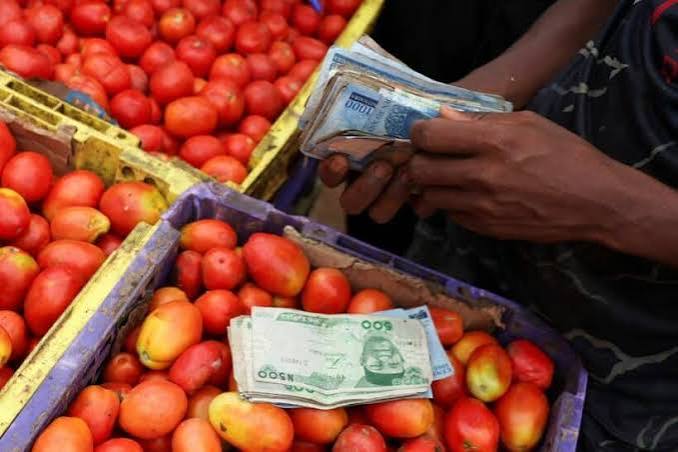
The NBS attributed the rise to higher prices of products including crayfish, fresh pepper, tomatoes, dried green peas, yam flour, water yam, beef, banana, cassava flour, cowpea, garri, Irish potatoes and yam tubers.
State-by-state analysis showed that Kogi (53.02%), Niger (43.83%) and Benue (40.83%) recorded the highest year-on-year food inflation rates, while Katsina (19.15%), Rivers (23.81%) and Imo (24.60%) posted the slowest increases.
On a month-on-month basis, Katsina (16.83%), Kebbi (9.79%) and Niger (8.96%) experienced the sharpest rise in food inflation.
Conversely, Borno (3.54%), Benue (-2.36%) and Bayelsa (-1.34%) recorded the slowest month-on-month food inflation, with Benue and Bayelsa posting declines during the period.
The latest figures suggest that while overall inflationary pressures are beginning to ease, rising food costs remain a major challenge for households across the country.