



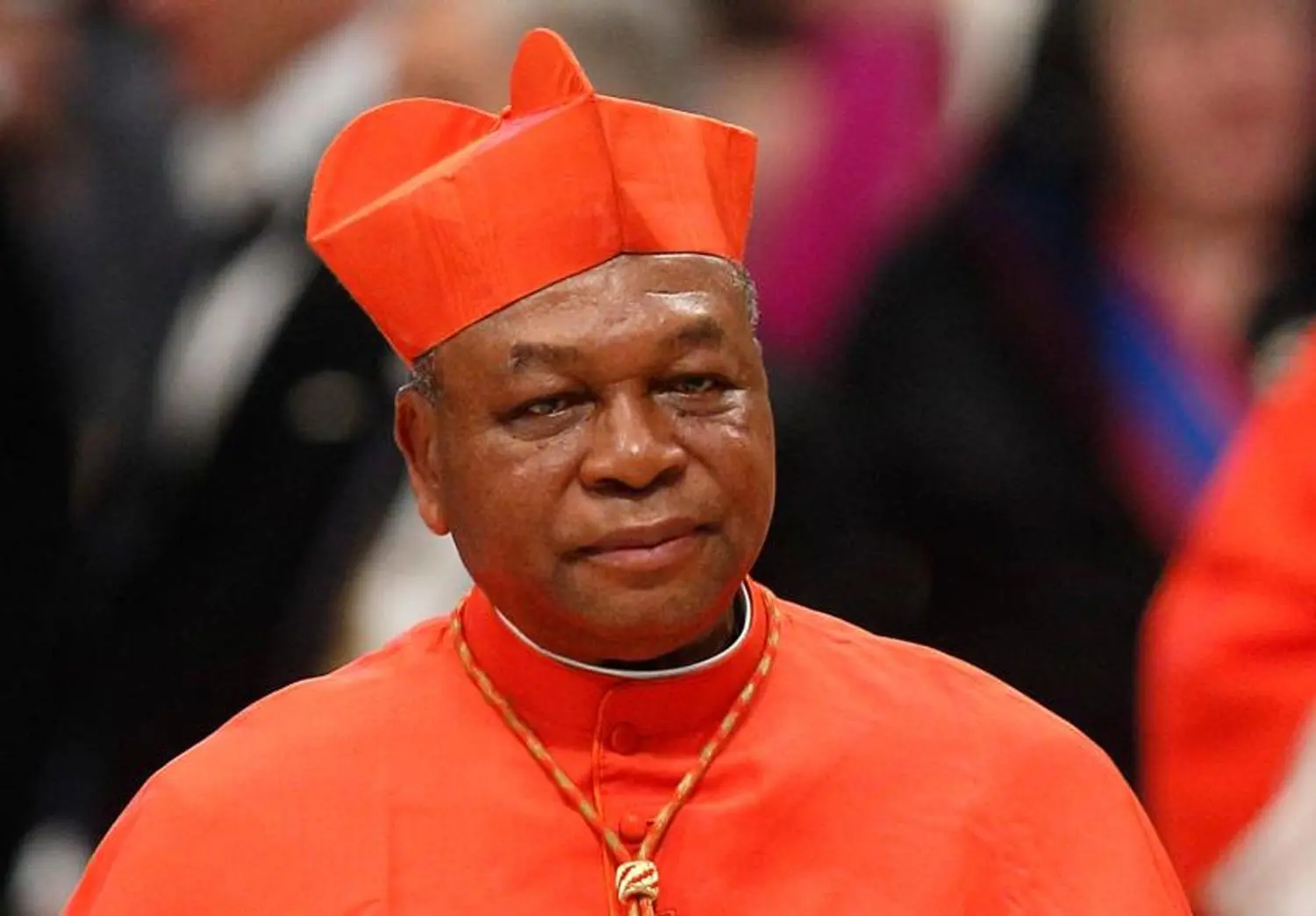
Cardinal John Onaiyekan, the Archbishop Emeritus of Abuja, has urged the Presidency to channel its energy towards improving governance rather than engaging in public exchanges over the concerns recently raised by the Catholic Bishops’ Conference of Nigeria (CBCN).
Speaking on Monday during Frontline, a current affairs programme on Eagle 102.5 FM in Ilese-Ijebu, Ogun State, the respected cleric said the bishops had already conveyed their position directly to President Bola Tinubu and were now interested only in seeing tangible improvements in the lives of Nigerians.
His comments came after presidential aides criticised his disclosure that President Tinubu disagreed with the bishops’ assessment of the country’s economic and security situation during a meeting held at the Presidential Villa in Abuja on July 28.
Onaiyekan made it clear that the bishops would not be drawn into a media debate with government officials.
“I would not even answer that question. We have no response for them. We have spoken and the only response we are waiting for is whether it is affecting the way they are governing. That some of the supporters of government and the state and spokesperson may have their own idea about what they think they should be saying on behalf of their principal is their business, not mine,” he said.
He added that public reactions from Nigerians were sufficient indication that the issues raised by the bishops resonated widely.
“As for response to the things that we are hearing, I don’t even have to say anything because the social media is full of response from the Nigerian people and that for me is more than enough,” he stated.
Following the meeting with the bishops, the Presidency challenged Onaiyekan’s account of the discussions. Special Adviser to the President on Media and Public Communications, Daniel Bwala, argued that the cardinal spoke on behalf of the Catholic Church rather than the wider Christian community, while Presidential spokesman Bayo Onanuga defended the administration’s economic reforms, insisting they were laying the foundation for national recovery.
Another presidential aide, Temitope Ajayi, also criticised the cleric for publicly discussing details of the closed-door meeting in a statement titled Cardinal Onaiyekan’s Abuse of Clerical Privilege.
Responding, Onaiyekan stressed that the bishops’ intervention was motivated by a moral obligation to speak on issues affecting every Nigerian, not by denominational interests.
“We didn’t go there just as Catholic bishops pushing the Catholic agenda. No. We went there as people who are with the spiritual mandate to speak to anybody in the name of God,” he said.
He explained that the audience with President Tinubu was requested by the Catholic Bishops’ Conference after several months of waiting and was intended to offer constructive observations on governance rather than pursue church-related interests.
“The Bishops visited President Tinubu last week and we requested for audience. It took some months before we were granted the audience and we prepared to see him. The main reason why we wanted to see him was not to go on an evangelical mission. We didn’t go there to preach to him or try to convert him to the Catholic Church. We went there to share our views and thoughts about the government which he heads, hoping that our ideas will be taken into consideration,” he explained.
The former Archbishop expressed optimism that the meeting would serve as the beginning of sustained dialogue between the Federal Government and the Catholic bishops.
“We are hoping that our meeting with the President or our dialogue with the government of Nigeria did not end with that visit,” he said.
He added that the bishops would welcome another opportunity to present more detailed recommendations.
“We are hoping that somehow or the other, he will invite us, not necessarily to meet him, but at least to open up an avenue for us to give more information and express more concerns than we could in the ten minutes talk that we gave to him.”
Onaiyekan also dismissed suggestions that the bishops were pursuing political objectives, noting that the Catholic Church prohibits its clergy from participating in partisan politics.
“I have told you already that I am not even prepared to start engaging anybody. The document was prepared by the bishops of Nigeria and it was passed unanimously. We don’t have any political ambitions. Even our church does not allow us to engage in party politics,” he said.
Speaking on the state of the economy, the cardinal acknowledged that government officials frequently cite encouraging macroeconomic indicators but argued that the real measure of success should be the welfare of ordinary Nigerians.
“If we admit that the role of government is the welfare of citizens, then it means we are not going to judge the success of our government on the basis of statistics from GDP, the World Bank or whatever. The important thing is, how is the life of the Nigerian?” he asked.
He identified youth unemployment as one of Nigeria’s most pressing challenges, lamenting that many university graduates remained without jobs or hope of building stable futures.
“The terrible thing now is many of our young people that have struggled to finish university are all going around with their degrees. They are unable to get a job. Therefore, they can’t even think of marriage. They can’t think of starting a family. They can’t think of planning their life. That is terrible,” he said.
According to him, addressing Nigeria’s challenges requires sincerity, fairness and the political will to implement the right policies.
“The only thing it takes is political will to do the right thing, to be honest in how government is run, to be just to everybody and to be fair in this,” he stated.
Onaiyekan further advocated broader engagement between government and faith leaders, suggesting that Christian and Muslim leaders should jointly meet with President Tinubu to discuss national issues and contribute ideas that would strengthen governance and improve the welfare of Nigerians.
“We are hoping that our message will be shared by other religious leaders in Nigeria, first other Christians in the context of CAN, and indeed other believers, including our Muslim religious leaders. It would be wonderful if we could organise a meeting with Mr. President and all the religious leaders in Nigeria, talking together,” he said.